Are You Still Marketing Like a Corner Shop? How Supermarket Chains Are Winning Customers in 2026
What This Blog Covers
- Why old-school “corner shop” marketing tactics no longer work in 2026
- How supermarket chains are using data, personalization, and automation to win customers
- The specific strategies driving loyalty and repeat purchases at scale
- How smaller retailers and local businesses can adopt these tactics without a corporate budget
Attention: The Loudspeaker and the Discount Sticker Aren’t Working Anymore
For decades, “marketing” for a small retail shop meant a few simple things: a discount sign in the window, a loudspeaker announcement, maybe a flyer handed out at the entrance. It worked when the shop was the only option in the neighborhood and customers had nowhere else to compare prices.
That world doesn’t exist anymore.
Today, a customer in Kuwait can compare prices across three supermarket apps, check loyalty point value, see a personalized discount notification, and have groceries delivered — all before they’ve even left their couch. Meanwhile, the neighborhood shop is still relying on the same window sign it used ten years ago.
The gap isn’t about shop size. It’s about strategy. Supermarket chains have quietly rebuilt how they attract, retain, and re-engage customers — and it has nothing to do with shouting the loudest discount. It’s about knowing the customer better than the customer knows themselves.
If your marketing still looks like a corner shop’s, here’s exactly what’s leaving you behind — and how to catch up.
Interest: What Supermarket Chains Are Actually Doing Differently
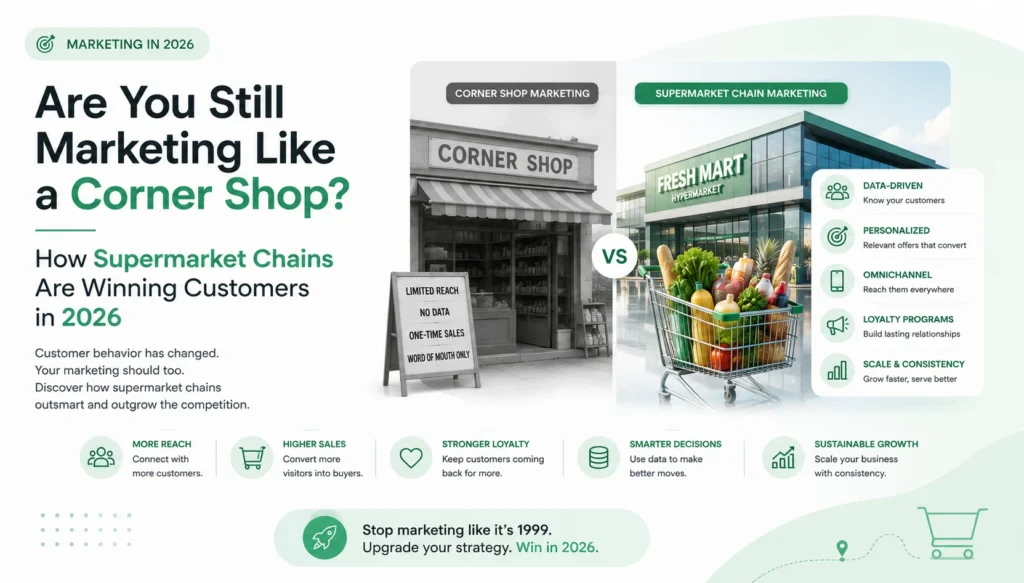
1. Data-Driven Personalization
Large supermarket chains track purchase history, shopping frequency, and preferences through loyalty apps and cards. This allows them to send hyper-relevant offers — a discount on baby formula to a parent, a deal on coffee to a daily buyer — instead of blasting the same generic discount to everyone.
2. Loyalty Programs Built on Data, Not Just Points
Modern loyalty programs aren’t just “buy 10, get 1 free.” They’re tiered systems that reward high-value customers with exclusive perks, early access to sales, and personalized rewards — turning casual shoppers into repeat customers.
3. Omnichannel Presence
Supermarket chains meet customers wherever they are — in-app notifications, SMS reminders, WhatsApp order updates, email promotions, and in-store digital screens all work together as one connected experience, not separate disconnected efforts.
4. Automated Customer Journeys
Behind the scenes, marketing automation tools trigger messages based on customer behavior: a “we miss you” offer after two weeks of no visits, a restock alert for a frequently bought item, or a birthday discount sent automatically, with zero manual effort.
5. Delivery and Convenience as Marketing
Fast delivery apps and click-and-collect services aren’t just operational features — they’re marketing tools. Convenience itself has become a competitive advantage that keeps customers coming back instead of shopping around.
6. Consistent Brand Experience
From social media tone to in-store layout to app design, large chains maintain a consistent, professional brand identity — building the kind of familiarity and trust that a mismatched flyer-and-sign approach can’t replicate.
Desire: Why This Shift Matters for Every Retailer — Big or Small
Customers Now Expect Personalization
Once a shopper experiences a personalized discount or a relevant reminder from one store, generic marketing from another feels outdated by comparison. Expectations have shifted permanently — and they apply to every retailer, regardless of size.
Loyalty Is Now Earned Through Value, Not Proximity
Being the “closest shop” isn’t enough anymore when a competitor is one delivery-app tap away. Loyalty today comes from consistently offering relevant value — not just physical convenience.
Automation Levels the Playing Field
The good news: the tools that power large supermarket chains’ marketing — CRM systems, automated messaging, loyalty apps — are now affordable and accessible even for small and mid-sized retailers. You no longer need a corporate marketing department to compete.
Data Beats Guesswork
Chains aren’t guessing what customers want — they’re using real purchase data to decide. Smaller retailers who start tracking even basic customer behavior (top purchases, repeat visit frequency) can make sharper marketing decisions instead of relying on instinct alone.
First-Movers in Their Category Win
In local markets, the first small or mid-sized retailer to adopt this kind of data-driven, automated marketing approach typically pulls ahead of competitors still relying on outdated tactics — building loyalty before competitors even realize the shift has happened.
Action: How to Start Marketing Like a Chain (Without a Chain’s Budget)
Step 1: Start Collecting Customer Data
Even a simple loyalty card, phone number capture at checkout, or an app-based rewards system gives you the data needed to personalize future offers.
Step 2: Set Up Basic Marketing Automation
Use accessible tools to automatically send WhatsApp or SMS reminders, birthday discounts, or “we miss you” messages — no manual follow-up required.
Step 3: Build a Simple Loyalty Program
Reward repeat customers with tiered perks or point systems, not just one-size-fits-all discounts.
Step 4: Create a Consistent Omnichannel Presence
Make sure your social media, WhatsApp business account, and in-store messaging all reflect the same tone, offers, and brand identity.
Step 5: Prioritize Convenience
Whether it’s easier checkout, delivery partnerships, or online ordering, reducing friction for the customer is one of the most effective forms of marketing available today.
Step 6: Review Performance Monthly
Track which offers and messages actually drive repeat visits, and refine your approach based on real results — the same way large chains continuously optimize their campaigns.
The Bottom Line
Supermarket chains aren’t winning customers because they have bigger budgets — they’re winning because they’ve replaced guesswork with data, and manual effort with automation. The tools that made this possible are no longer exclusive to large corporations. Any retailer — from a mid-sized supermarket to a neighborhood shop — can adopt the same data-driven, automated, and personalized approach to build the kind of loyalty that keeps customers coming back.
The question isn’t whether you can compete with the big chains. It’s whether you’re still marketing like it’s a decade ago.
Need Help Modernizing Your Retail Marketing?
If you’re ready to move beyond corner-shop tactics and build a marketing system that actually competes with the big chains, feel free to reach out. As a freelance digital marketer based in Kuwait, I help retailers and supermarkets set up loyalty programs, marketing automation, and personalized customer journeys that drive real repeat business. For any enquiries about setting up a modern, automated marketing system for your store, get in touch and let’s build a strategy that keeps your customers coming back.