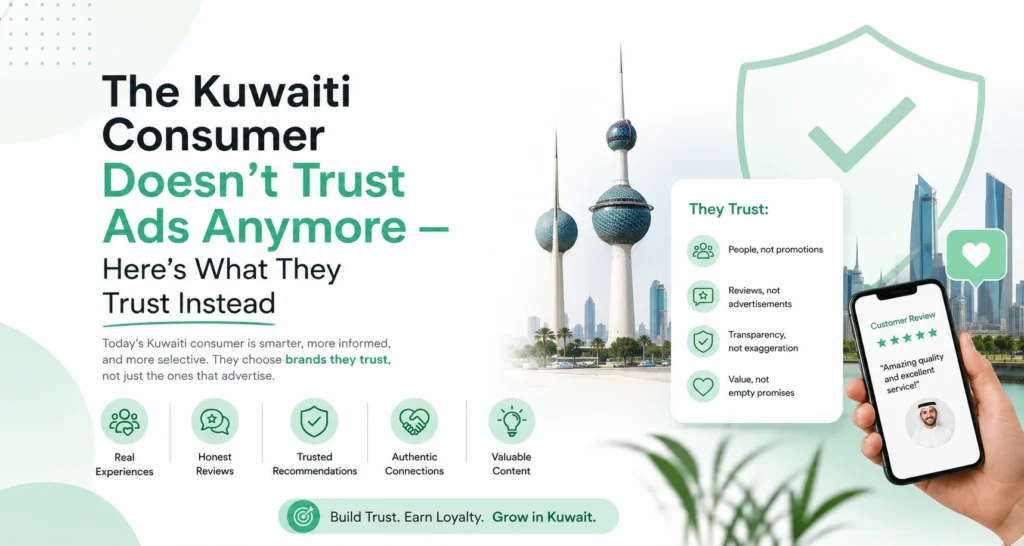
The Kuwaiti Consumer Doesn’t Trust Ads Anymore — Here’s What They Trust Instead
What This Blog Covers
- Why Kuwaiti consumers are becoming increasingly skeptical of traditional advertising
- The psychology and market shifts behind declining ad trust in Kuwait
- What consumers trust instead — word-of-mouth, influencer marketing, UGC, and community-driven recommendations
- Practical steps brands in Kuwait can take to earn trust instead of just buying attention
Attention: The Ad Just Got Skipped — Again
Scroll through Instagram or Snapchat in Kuwait today, and watch what happens the moment a sponsored post appears: swipe. Skip. Ignore. It happens in less than a second, almost as a reflex.
This isn’t a coincidence — it’s a pattern. Kuwaiti consumers, especially the younger, highly connected demographic, have developed what marketers call “ad blindness.” They’ve seen enough polished, overly promotional content to instinctively tune it out. A flashy discount banner or a generic “Best in Kuwait!” claim no longer moves the needle the way it did five years ago.
The uncomfortable truth for brands is this: spending more on ads doesn’t automatically mean earning more trust. In a market as tightly connected as Kuwait — where word gets around fast through family, friends, and group chats — trust isn’t bought through ad spend. It’s earned through something far more human.
So if ads aren’t the trust-builder they used to be, what is?
Interest: Why Kuwaiti Consumers Have Grown Skeptical of Advertising
To understand what Kuwaiti consumers trust now, it helps to understand why they stopped trusting traditional ads in the first place.
1. Oversaturation of Paid Promotion
Kuwait has one of the highest social media penetration rates in the Gulf region. With that comes an overwhelming volume of sponsored content — paid posts, boosted stories, and influencer shoutouts flooding every feed. When everything is an ad, nothing feels genuine.
2. A Tightly Knit, Word-of-Mouth Culture
Kuwait’s social fabric is built on close family and community ties. Recommendations from a cousin, a colleague, or a trusted WhatsApp group carry far more weight than a brand’s own claims about itself. This isn’t new — but its dominance over advertising has intensified as digital word-of-mouth spreads faster than ever.
3. Rising Awareness of Paid Influencer Content
As influencer marketing matured in Kuwait, so did consumer awareness of it. Audiences can now spot a paid partnership from a genuine recommendation almost instantly — and they’ve grown more selective about which voices they actually believe.
4. Global Skepticism Toward Advertising in General
This isn’t unique to Kuwait. Globally, trust in traditional advertising has been declining for over a decade, according to multiple international trust surveys. Kuwaiti consumers, being highly digitally engaged and globally connected, mirror — and in some cases amplify — this broader trend.
The result? Advertising alone no longer builds credibility. It has to be paired with something that feels trustworthy — not just something that looks polished.
Desire: What Kuwaiti Consumers Actually Trust
If ads have lost their grip, here’s what has taken their place — and why brands need to pay close attention.
Word-of-Mouth and Personal Recommendations
Nothing beats a direct recommendation from someone the consumer already trusts. In Kuwait’s close-knit social culture, a single positive mention in a family WhatsApp group or majlis conversation can outperform an entire paid ad campaign.
Authentic Influencer Voices (Not Just Reach)
Influence in Kuwait has shifted from follower count to perceived authenticity. Micro-influencers and niche content creators — who engage genuinely with smaller, loyal audiences — are increasingly more persuasive than mega-influencers pushing obviously sponsored content.
User-Generated Content (UGC)
Real customers sharing real experiences — unboxing videos, honest reviews, before-and-after posts — carry a credibility that branded content simply can’t replicate. Consumers trust other consumers far more than they trust the brand itself.
Online Reviews and Ratings
Google reviews, Instagram comments, and community forum discussions have become informal trust signals. A restaurant, clinic, or retail brand with consistent, genuine positive reviews builds more credibility than one running heavy paid promotion with no social proof behind it.
Transparency and Consistency
Kuwaiti consumers increasingly reward brands that are transparent about pricing, sourcing, and service quality — and who behave consistently across every touchpoint, not just in a polished ad campaign.
Community and Cultural Relevance
Brands that genuinely understand and reflect Kuwaiti culture, values, and community life build deeper trust than those running generic, one-size-fits-all campaigns translated from elsewhere.
Action: How Brands in Kuwait Can Earn Trust Instead of Buying It
Step 1: Shift Budget Toward Authentic Voices
Instead of pouring the entire marketing budget into paid ads, allocate a portion toward partnering with genuine micro-influencers and content creators whose audiences actually trust them.
Step 2: Actively Collect and Showcase UGC
Encourage customers to share their real experiences, and feature that content across your channels. Real photos and honest reviews build more credibility than any studio-shot advertisement.
Step 3: Prioritize Review Management
Actively monitor and respond to Google and social media reviews. A brand that engages with feedback — good or bad — signals transparency and builds long-term trust.
Step 4: Build a Referral or Community Program
Since word-of-mouth is Kuwait’s strongest trust driver, formalize it. Referral incentives, loyalty communities, and family-oriented promotions tap directly into the culture that already drives purchase decisions.
Step 5: Be Consistent, Not Just Loud
Trust is built over repeated, consistent experiences — not a single viral campaign. Ensure your messaging, pricing, and customer service align across every platform and interaction.
Step 6: Localize, Don’t Just Translate
Campaigns that genuinely reflect Kuwaiti culture, language nuances, and community values resonate far more than generic regional content repurposed for the local market.
The Bottom Line
Kuwaiti consumers haven’t stopped making purchase decisions — they’ve just changed how they make them. Trust has shifted away from polished advertising and toward real people, real reviews, and real relationships. Brands that recognize this shift and invest in authenticity, community, and transparency will build the kind of loyalty that ads alone simply can’t buy.
Need Help Building Trust-Driven Marketing in Kuwait?
If you’re looking to move beyond traditional advertising and build a marketing strategy rooted in trust, authenticity, and community, feel free to reach out. As a freelance digital marketer based in Kuwait, I help brands design marketing and automation setups that combine genuine engagement — influencer partnerships, UGC campaigns, review management, and automated follow-up systems — with the local cultural insight needed to actually earn consumer trust. For any enquiries, get in touch and let’s build a strategy Kuwaiti consumers will actually believe in. www.amaljithp.com